
Volunteers Who Kept Shipping
The Joint Endeavour of Delphi Innovators emerged in the late 1990s as an informal coalition of Delphi developers who shared a conviction: the ecosystem needed a serious, open-source code commons that no single vendor controlled. What grew from that conviction was the JVCL and JCL ↗, two collections that at their peak contained more Delphi components and utility routines than most commercial libraries.
The JEDI Code Library (JCL) addressed the infrastructure layer — string handling, mathematics, file-system abstraction, Windows API wrappers, exception utilities — the kind of workmanlike code that every application needs and every developer was quietly reimplementing in isolation. The JEDI Visual Component Library (JVCL) sat above it, offering several hundred visual and non-visual components built on the VCL's published-property and RTTI machinery. Both libraries were released under the Mozilla Public License, a deliberate choice that permitted commercial application use without forcing vendors to open their own source.
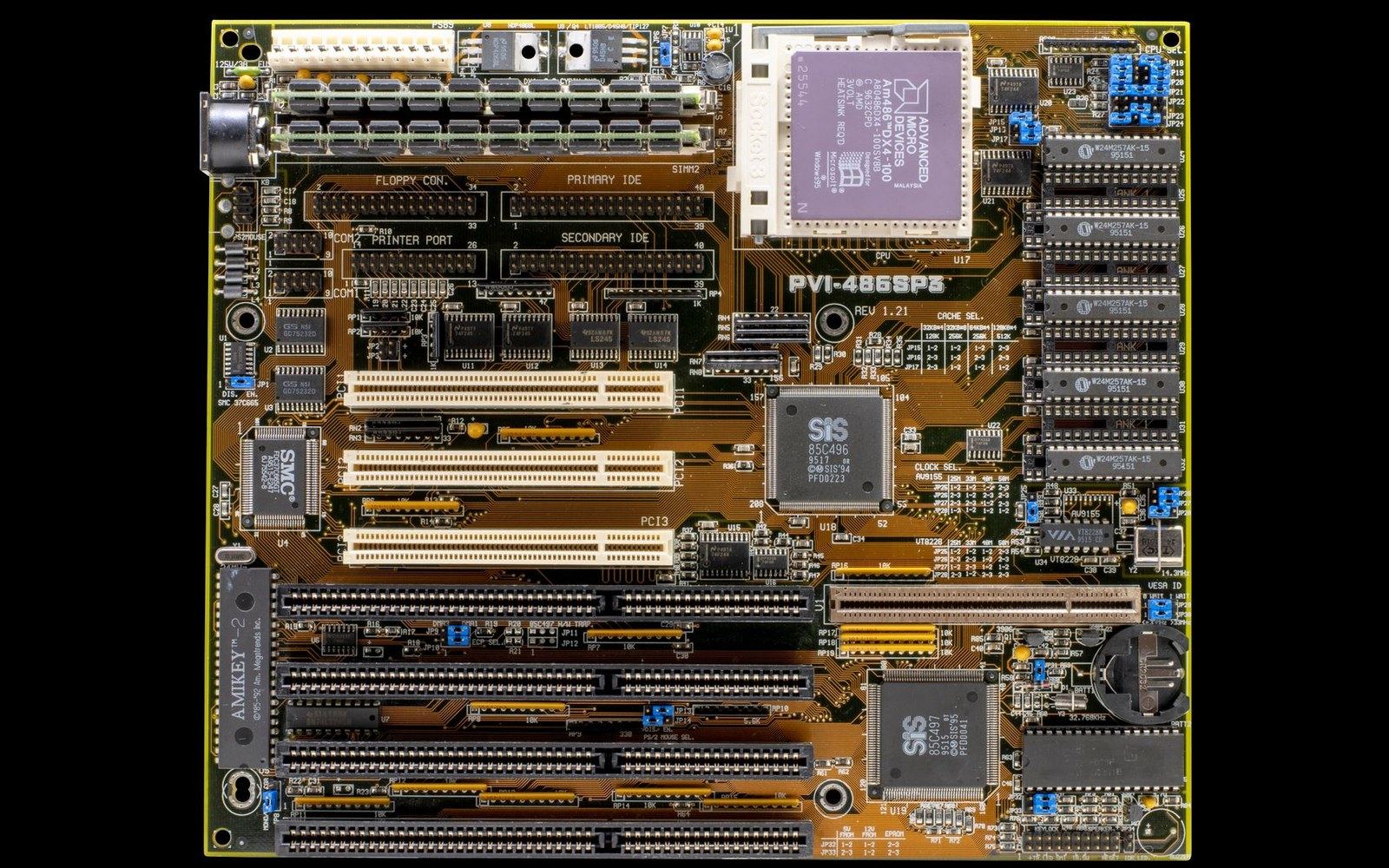
Mid-1990s PC hardware is what the size argument was made against: a machine measuring its memory in megabytes, not gigabytes.
Photo: Nicolas Foster / Pexels

The VCL's depth is the point: a form arrives with several generations of ancestor behaviour already linked into it.
Governance was as informal as the founding impulse. Contributors submitted patches through a tracked system; a rotating group of package maintainers reviewed and integrated them. No company funded the work; no venture round set the roadmap. The libraries were sustained by developers who found a missing piece, wrote it, and submitted it — a pattern that scaled surprisingly far because the Delphi component model made discrete, testable, reusable units the natural atomic contribution.
What kept JEDI coherent through Borland's commercial turbulence — the Kylix detour, the CodeGear spin-off, the Embarcadero acquisition — was a combination of version tagging discipline and the sheer inertia of accumulated code. When each new Delphi release broke something, volunteers updated package declarations, resolved unit-scope naming conflicts, and re-tested. The unicode migration in Delphi 2009 was among the most disruptive events the libraries weathered, requiring systematic auditing of string-type assumptions across hundreds of units.
JEDI's legacy is not simply the code it produced but the model it demonstrated: that a large, structured, voluntarily maintained Pascal library could track a commercial compiler's releases across more than a decade without a payroll. For a language whose commercial stewardship changed hands repeatedly, that kind of independent continuity carried real weight.
More in Delphi