
The $49.95 price tag was not a concession — it was a weapon.
The Calculation Behind the Box
Philippe Kahn arrived in the United States from France in the early 1980s, having studied mathematics and worked with Niklaus Wirth at ETH Zürich. He founded Borland International ↗ in Scotts Valley, California in 1983 with a thesis about software pricing that ran directly against the grain of the industry: that a low, fixed, no-negotiation price would generate volume that per-unit margins could never match.

Delphi-era developer conferences were where version changes got argued out in front of the people who had to migrate.
Photo: Matheus Bertelli / Pexels
The vehicle for proving it was Turbo Pascal. Kahn licensed Anders Hejlsberg's compiler — then called PolyPascal, written by the Danish developer — and brought it to market at $49.95. At a moment when competing development tools from larger vendors cost several hundred dollars, the price was less a retail strategy than a provocation. Kahn placed a full-page advertisement in BYTE magazine, a calculated risk taken before Borland had the cash to fulfil a large order, and the response validated every part of the bet.
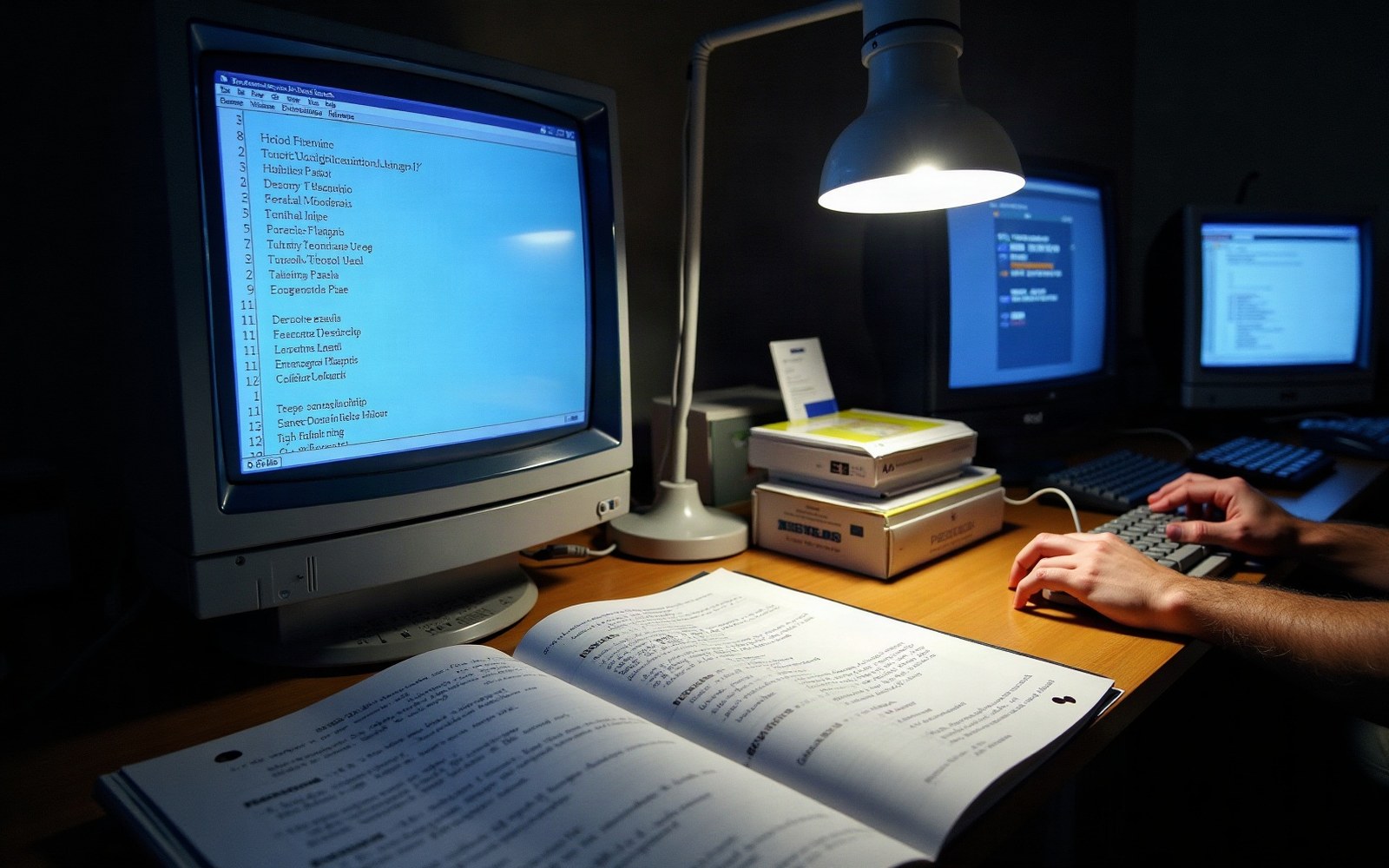
Pascal's declaration-before-use rule is legible in any listing: every type and variable is named before the statements that touch it.
What followed was not simply strong sales but a structural shift in who could afford to write software professionally. Turbo Pascal's single-pass compiler delivered compile speeds measured in thousands of lines per minute on the hardware of the day, and the integrated editor-compiler-linker environment — everything in one executable that fit on a single floppy — meant that a developer needed no other tooling. The price removed the last barrier. Within months, Borland was a real company rather than a gamble.
Kahn was not a compiler engineer; he was a businessman with a clear theory of market creation. He understood, and said repeatedly in published interviews throughout the 1980s, that software piracy was not his enemy — obscurity was ↗. A product that everyone could afford to buy legitimately would circulate faster and generate more paying customers than an expensive one protected by copy controls. That philosophy shaped Borland's entire early catalogue and established the company as a challenger that forced established vendors to rethink their own pricing.
The decision to sell Turbo Pascal the way Kahn sold it made Object Pascal a language that an entire generation encountered first, not through university curricula or corporate site licences, but through a mail-order card in the back of a computing magazine.
More in People