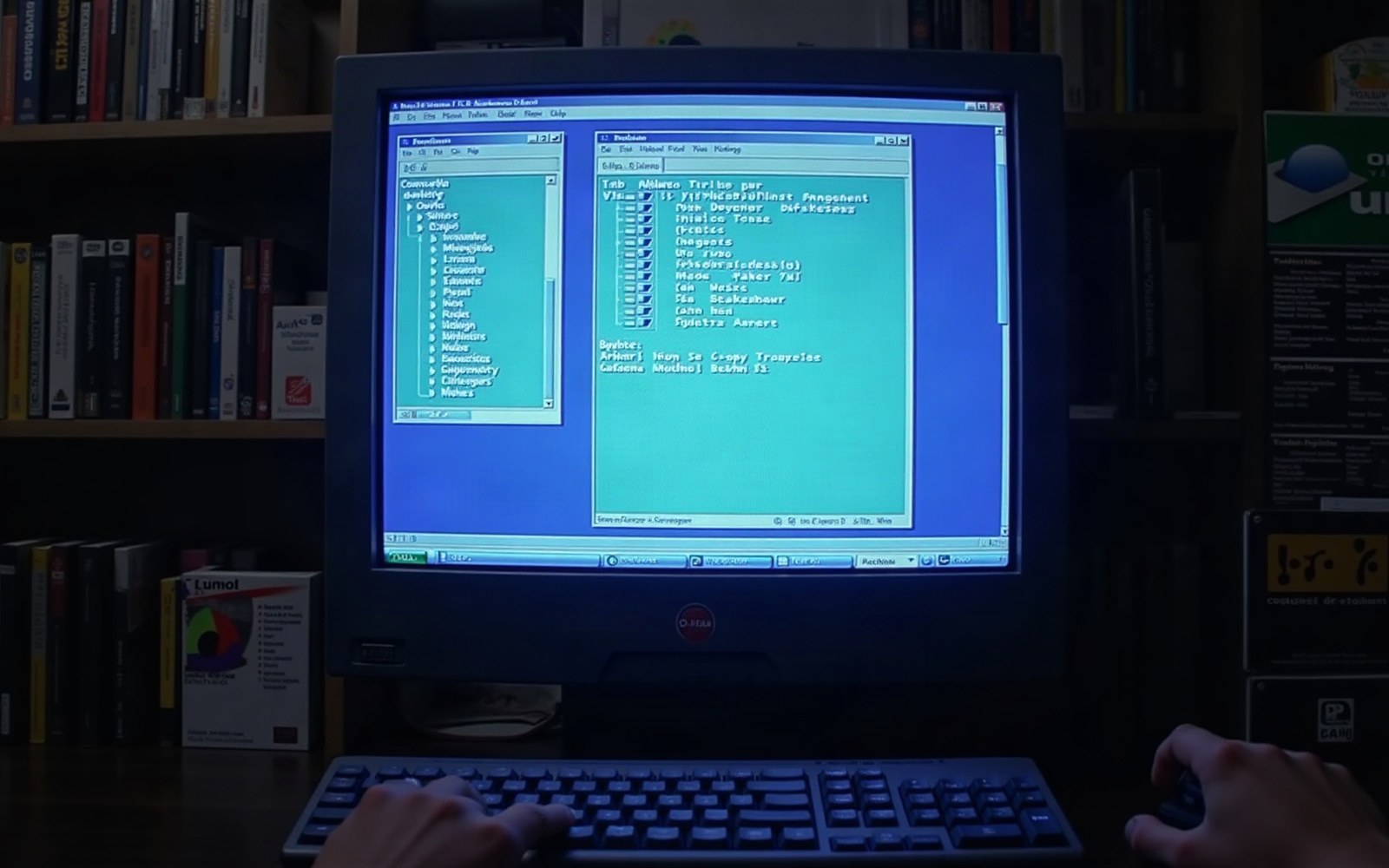
Borland shipped a Linux IDE in 2001. The Linux community was not waiting for it.
The Port and Its Architecture
Borland announced Kylix in late 2000 with considerable fanfare, positioning it as the Delphi experience transplanted to Linux — a rapid application development tool for a platform that had been gaining serious commercial attention since the late 1990s. The first release shipped in February 2001, followed by a C++ edition and then Kylix 3 in 2002. On paper the pitch was coherent: Object Pascal developers could write Linux desktop and server applications using a familiar IDE, a form designer, and a component-based architecture that mirrored what Delphi had made productive on Windows.
The key engineering decision was the CLX (Component Library for Cross-platform), a replacement for the VCL built on top of Qt, then the cross-platform widget toolkit maintained by Trolltech. Where the VCL wrapped Win32 API calls, CLX wrapped Qt's C++ classes through a thin compatibility layer called QInterface. Borland also brought CLX back to Windows in Delphi 6 and 7, so that code written against CLX could theoretically compile for both platforms. The reality was more complicated. CLX was not a superset of the VCL; it was a parallel hierarchy with different property names, different event signatures and different streaming behaviour, meaning that existing Delphi applications were not simply recompilable for Linux — they needed meaningful rework.
What the Community Actually Wanted
The commercial failure of Kylix is well documented and has more than one cause, but the most structurally important is the mismatch between Borland's assumptions about the Linux developer and the Linux developer's actual preferences. Borland imagined a population of Windows Delphi developers eager to expand onto Linux, and a population of Linux developers who wanted the kind of visual, drag-and-drop RAD workflow that had sold Delphi to Windows shops throughout the 1990s. Both populations turned out to be smaller than projected.
Linux developers in 2001 worked overwhelmingly in C or C++, used open-source toolchains, and were culturally resistant ↗ to proprietary IDEs. The server-side Linux market — where the real commercial growth was happening — needed daemons, command-line utilities and web backends, not GUI desktop applications built on a Qt wrapper. The Kylix licensing model was also a friction point: the product was proprietary and priced in Borland's established commercial tier, competing against GCC, which was free in both senses.
Delphi-era developer conferences were where version changes got argued out in front of the people who had to migrate.
Photo: Matheus Bertelli / Pexels
A parts store rather than a code library, but the same premise — take a standard piece off the shelf instead of making one.
Photo: Charlie Merrow / Pexels
The Qt dependency added a second layer of difficulty. Applications built with Kylix required a specific version of the QInterface layer at runtime, making deployment on varied Linux distributions unreliable. Users reported compatibility failures across Red Hat, Mandrake and SuSE configurations that required manual intervention to resolve — the opposite of the frictionless deployment Borland had promised. Trolltech's own licensing for Qt on Linux had also shifted during this period, introducing commercial terms that affected how CLX could be distributed, and Borland's relationship with that dependency was never entirely clean.
Discontinuation and What It Left Behind
Kylix 3, released in 2002, was the last version. Borland quietly discontinued the product shortly afterward, and by the time CodeGear separated from Borland in 2006 Kylix was already a historical artefact. The CLX library was also retired: Delphi 2006 dropped CLX support, closing the cross-platform chapter that Kylix had opened.
The legacy is primarily cautionary. Kylix demonstrated that porting a tool is not the same as porting a market: the conditions that made Delphi commercially successful on Windows — a large population of corporate developers building GUI applications against Windows APIs, willing to pay for productivity — did not exist in the same form on Linux. The Free Pascal project and the Lazarus IDE eventually provided what Kylix could not: a genuinely open-source Object Pascal toolchain for Linux, maintained by a community that shared the platform's values rather than arriving from outside them. Where Kylix tried to sell Linux developers a Windows workflow, Lazarus grew from within the same open-source culture and survived accordingly.
More in After Borland