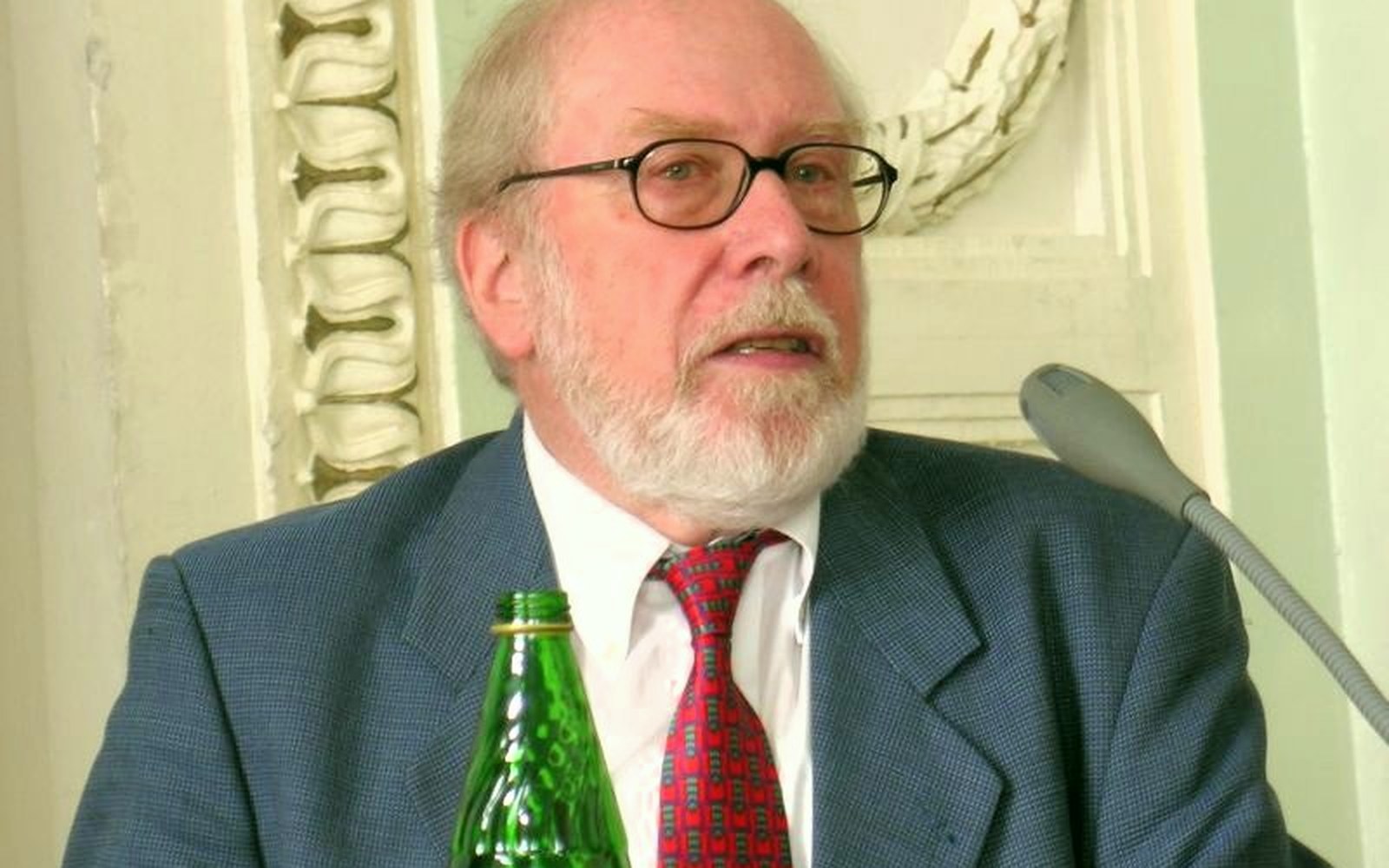
The man who published Pascal in 1970 lived long enough to see a commercial ecosystem flourish around a language he no longer fully recognised.
The Design and Its Intent
Niklaus Wirth published the Pascal report at ETH Zürich ↗ in 1970 with a precise ambition: a language small enough to teach systematic programming, disciplined enough to compile efficiently on modest hardware, and structured enough that the compiler could enforce habits the programmer might otherwise avoid. The influence of ALGOL 60 was direct — Pascal inherited block structure and strong typing — but Wirth stripped away complexity rather than adding it. The single-pass compilation architecture was not a workaround; it was a consequence of a syntax deliberately shaped so that every identifier could be resolved in one linear read.
The language spread through universities first, carried on mainframes and minicomputers across Europe and North America. Wirth documented his design intentions in successive publications, including the 1974 paper co-authored with Kathleen Jensen that codified the language formally. By the time Borland International shipped Turbo Pascal 1.0 in 1983 ↗ for $49.95, Pascal had become the dominant teaching language at English-speaking universities — but control of its direction had already begun to migrate away from Wirth.
The Distance Between Report and Product
Turbo Pascal was fast, cheap and brilliantly engineered by Anders Hejlsberg, then working at a Danish company whose product Borland licensed. It preserved the single-pass discipline and the core syntax, but it was emphatically a product, not a standard, and Philippe Kahn's Scotts Valley, California company had no obligation to the ETH report. Borland extended the language with units, strings and a non-standard object model, each addition solving a real commercial problem and each one widening the gap between the language Wirth designed and the language programmers were actually running.
Delphi, which Borland shipped in February 1995, widened that gap further and more self-consciously. The Object Pascal it deployed — shaped by Anders Hejlsberg as chief architect, with Allen Bauer and Danny Thorpe among those who built out the runtime — introduced a class model with inheritance, interfaces, exceptions and RTTI that bore the name Pascal while answering to the discipline of a modern object-oriented application framework. The VCL depended on published properties and runtime type information; the DFM streaming system depended on those same published properties to reconstruct a form from a file. These were not extensions Wirth had contemplated; they were an entirely different theory of what a language was for.
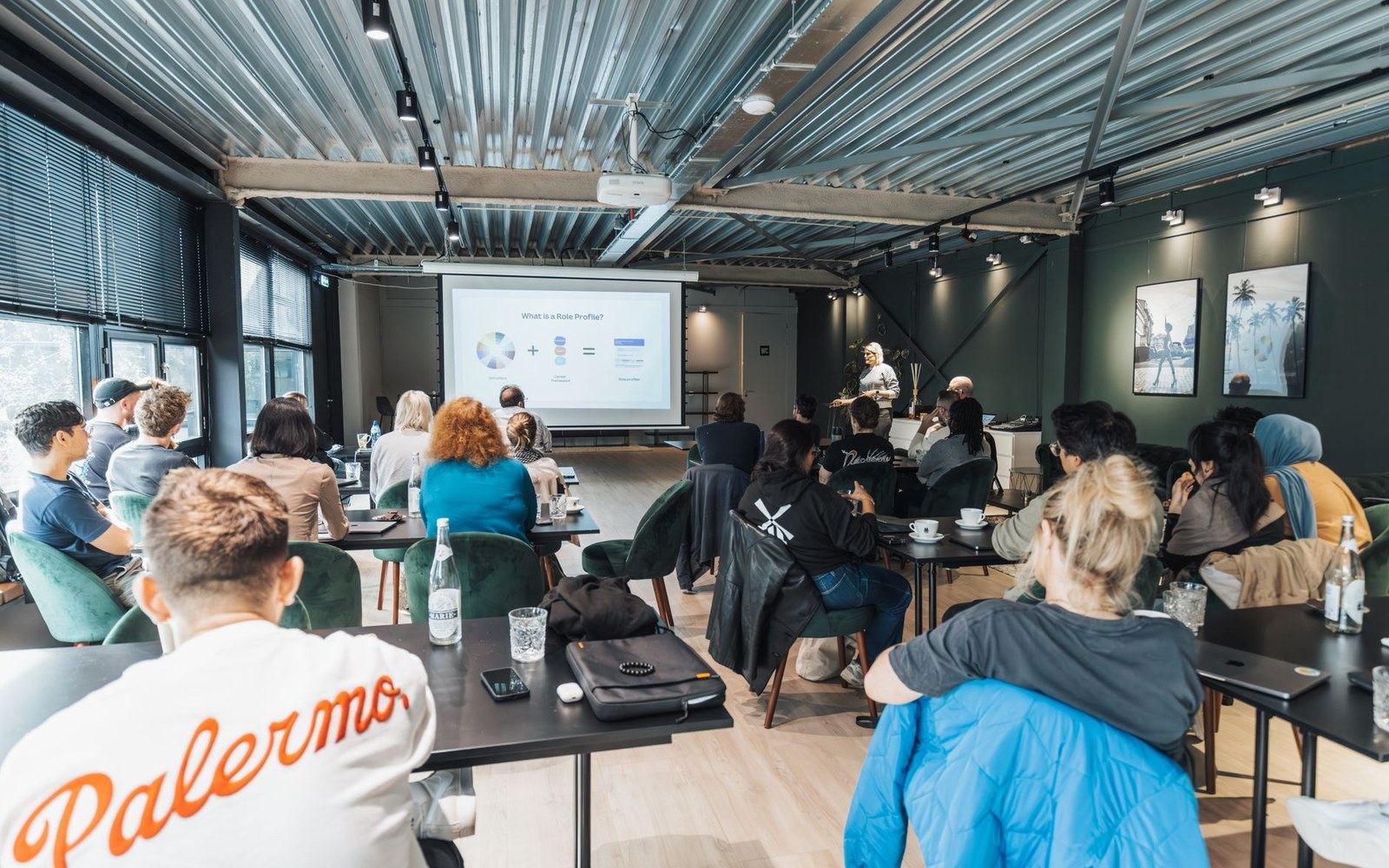
Delphi-era developer conferences were where version changes got argued out in front of the people who had to migrate.
Photo: Matheus Bertelli / Pexels
Wirth's own subsequent work — Modula-2, then Oberon — made his position clear without requiring him to attack Borland directly. Each successor language went in the opposite direction from Delphi: smaller, cleaner, more austere. Oberon in particular was a radical act of subtraction, removing features rather than adding them. Where Delphi's Object Pascal accumulated string types, generics (arriving with Delphi 2009), and eventually mobile and cross-platform compilation under Embarcadero Technologies, Wirth's own lineage pursued simplicity as an engineering virtue, not a marketing liability.
What Remained and What Did Not

Pascal's declaration-before-use rule is legible in any listing: every type and variable is named before the statements that touch it.
The question of how much continuity links the 1970 Pascal report to a modern RAD Studio ↗ project is partly terminological. The syntax is recognisably descended — begin/end blocks, the unit structure, the type declaration discipline — and the single-pass model survived long enough in Borland's compilers to shape how generations of programmers learned to structure code. The Free Pascal project, whose compiler Florian Klämpfl began writing in 1993, and the Lazarus IDE that followed it, preserved the same tradition on open-source terms, reaching platforms Wirth had never considered.
What did not survive, or survived only in altered form, was Wirth's core conviction that a programming language should be as small as its tasks allow. Delphi's commercial success depended on the opposite proposition: that a language should grow to meet the programmer's demands, and that a framework as large as the VCL was not a betrayal of Pascal but its most productive expression. Neither position was wrong, but they were irreconcilable — and the language that flourished was the one that did not belong to its designer.
Wirth received the Turing Award in 1984, in part for Pascal. By then the language had already left the building.
More in People